What Actually Is The ASEAN Summit & Why Does It Matter?
The 2025 ASEAN Summit is currently being held in Kuala Lumpur.

By May Vin Ang — 26 May 2025, 12:15 PM
So, we know about the road closure announcements and traffic diversions in Kuala Lumpur lately for the 2025 ASEAN Summit.
But what exactly is this event? And how is it important?
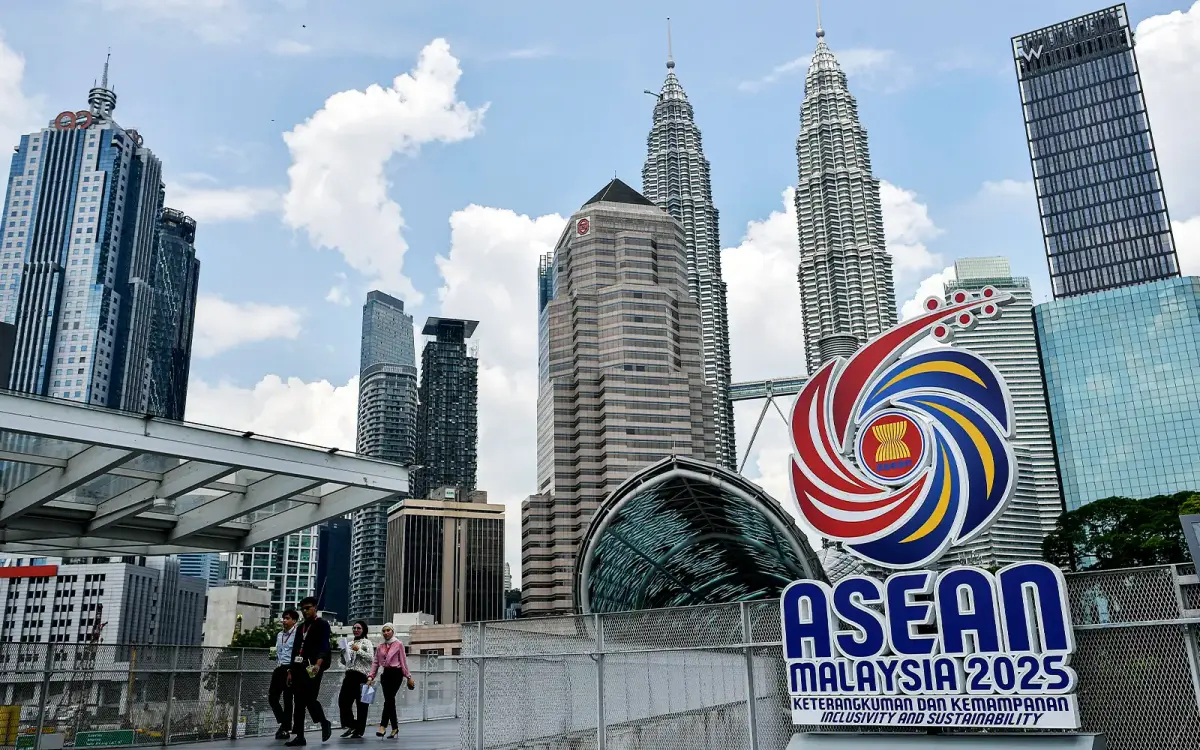
Well, the ASEAN Summit is a high-level meeting where leaders from Southeast Asian countries gather to talk about issues that affect the region — everything from trade and security to climate change and education
The Association of Southeast Asian Nations (ASEAN) was established on 8 August 1967, with the signing of the ASEAN Declaration by the founding member countries of ASEAN: Indonesia, Malaysia, the Philippines, Singapore, and Thailand.
The ASEAN Declaration spelled out aims and purposes for the association, including cooperation in the economic, social, cultural, technical, educational, and other fields, and in the promotion of regional peace and stability.
The ASEAN motto is "One Vision, One Identity, One Community".

From left to right: The foreign ministers — Narciso Ramos of the Philippines, Adam Malik of Indonesia, Thanat Khoman of Thailand, Tun Abdul Razak of Malaysia, and Sinnathamby Rajaratnam of Singapore — who signed the ASEAN declaration.
Image via ASEANThese are the 10 ASEAN member countries:
– Indonesia (joined in 1967)
– Malaysia (joined in 1967)
– Singapore (joined in 1967)
– Thailand (joined in 1967)
– The Philippines (joined in 1967)
– Brunei (joined in 1984)
– Vietnam (joined in 1995)
– Laos (joined in 1997)
– Myanmar (joined in 1997)
– Cambodia (joined in 1999)
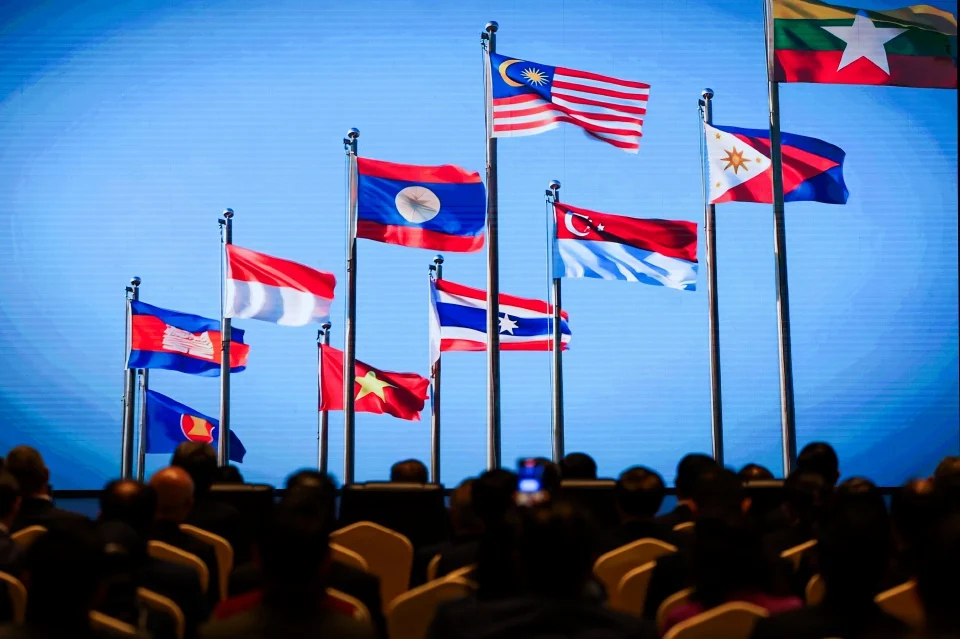
The ASEAN Summit is held twice a year to bring together the leaders of these 10 member states to discuss big-picture regional and global challenges
These meetings set the direction for how the countries work together on shared goals — whether it's boosting trade, tackling cybercrime, planning disaster responses, or improving public health.
For example, at last year's 44th and 45th ASEAN Summits in Laos, topics included: promoting sustainable agriculture, preventing child labour, strengthening government strategies on mental health and wellbeing, promoting safe and secure use of artificial intelligence, combating online scams and gambling in the region, and many more.
These aren't just theoretical conversations — they lead to real policies and collaborations across borders.
Sometimes, global powers like China, the US, Japan, and Australia also join in for related meetings — that's when it's called the ASEAN Plus format.
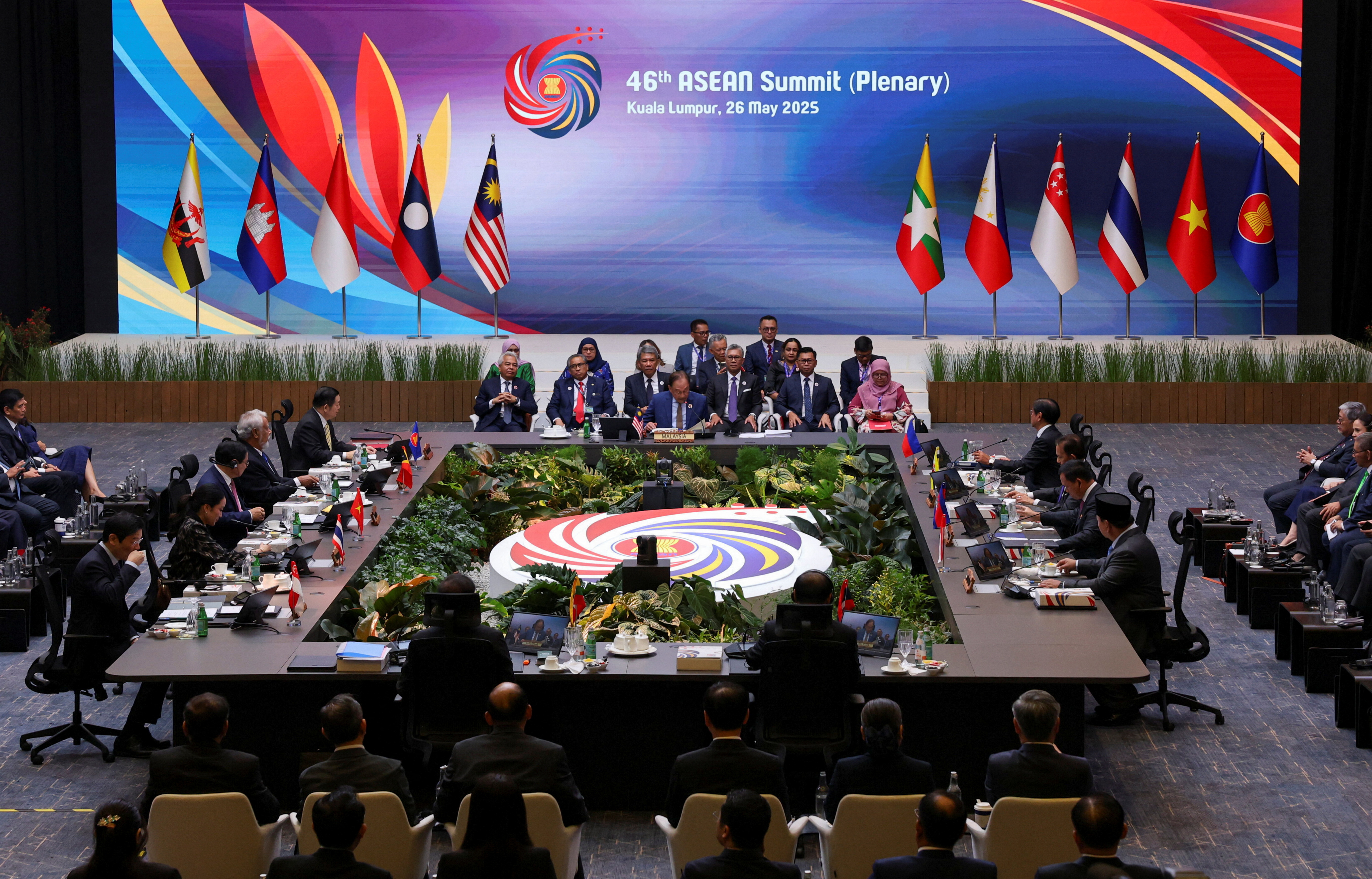
A general view during the 46th ASEAN Summit at the Kuala Lumpur Convention Centre in Kuala Lumpur.
Image via Hasnoor Hussain/ReutersThe ASEAN Summits are hosted by a member state holding the ASEAN Chairmanship for the year. And for 2025, it's Malaysia.
While the summit might seem like just another political event, the decisions made can directly impact our lives in ways we don't always realise:
Jobs & Economy: More investment = more opportunities.
Travel & Mobility: Easier movement between ASEAN countries.
Education & Work Abroad: More student exchanges and recognition of qualifications.
Digital Life: Better cybersecurity and digital infrastructure.
Prices: Lower trade barriers can affect what you pay for goods.
Analysts say this year's summit could pave the way for stronger trade alliances among gulf countries and China, especially in the wake of US President Donald Trump's tariffs.
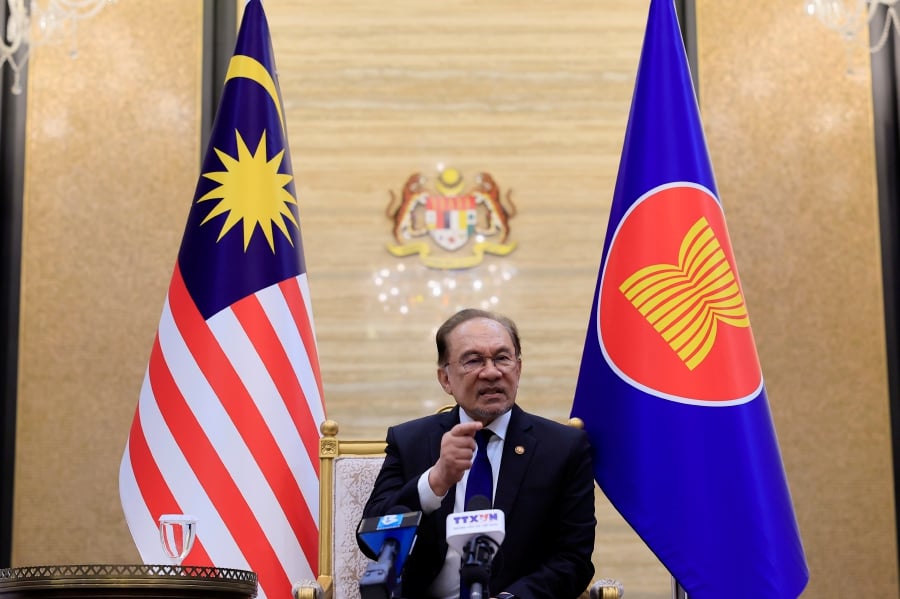
So yes, even if we're stuck in traffic this week — what's happening behind these discussions just might shape the future of the region, and our lives too
And heads up: according to the ASEAN Notional Calendar 2025, the 47th ASEAN Summit is scheduled to be held in Kuala Lumpur again on 26 October.
