Study Reveals 3 Reasons Why Malaysian Graduates Struggle To Make Ends Meet
The outlook remains challenging.

By Syazwan Bahri — 23 May 2025, 01:48 PM
A new study by Future Studies Berhad has shed light on why many Malaysian graduates are struggling to make ends meet, pointing to three major challenges in the current job market
The recently released report found that many Malaysian graduates are earning just enough to get by, with little left to save or to improve their financial situation.
1. Shrinking purchasing power and stagnant wages
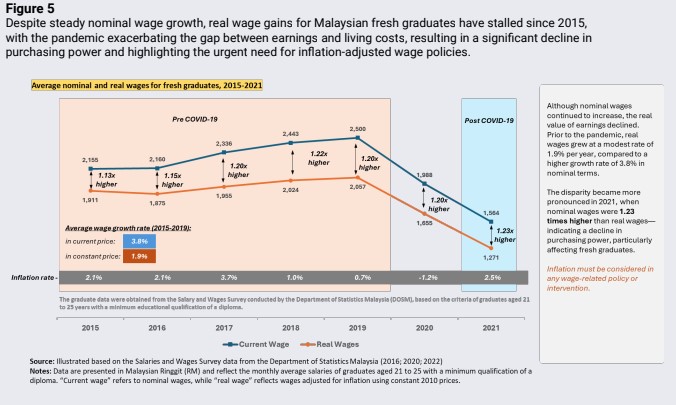
Between 2015 and 2019, nominal wages for fresh graduates increased by an average of 3.8% annually. But once adjusted for inflation, the real increase in purchasing power was only 1.9%. That gap widened during and after the COVID-19 pandemic.
The study points out that while graduate salaries may look like they're going up on paper, inflation is eating away at their actual value, especially after the pandemic.
2. Employability rates above 80% don't tell the full story
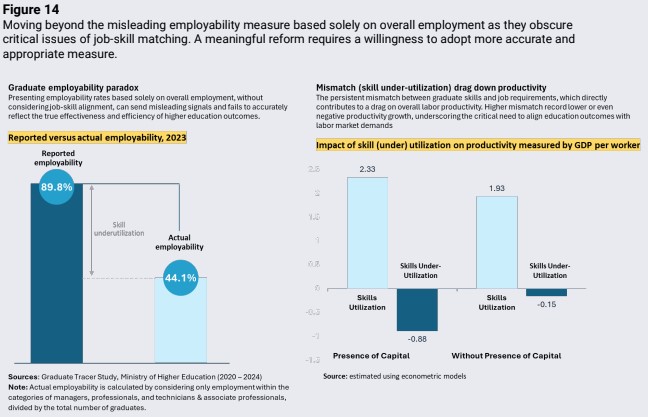
While employability figures for Malaysian graduates often exceed 80%, they include all types of jobs, even those that don’t match a graduate's skill level or pay a decent wage.
Over 70% of employed graduates are in semi- and low-skilled roles, and more than 65% of degree holders earn below RM3,000 monthly. This points to a mismatch between graduates' qualifications and the jobs they end up in.
As a result, pursuing higher education is becoming a much riskier investment, especially for lower- and middle-income families, who are grappling with rising education costs without seeing a clear return in the form of better wages.
3. The study flags 'crises' in the current job market
The report identified serious structural issues — labelled as 'crises' — that contribute to the mismatch between graduates' skills and available jobs.
These include ineffective pre-employment programmes and a lack of strong demand for skilled workers from the private sector.
As a result, many graduates face what the report calls a "compressed and delayed wage trajectory", where their earnings stay close to those of non-graduates, especially in the early stages of their careers.
The also study outlined several ways to improve the struggling job market
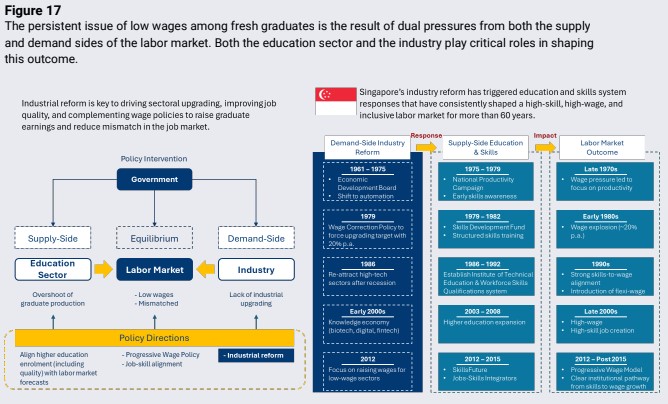
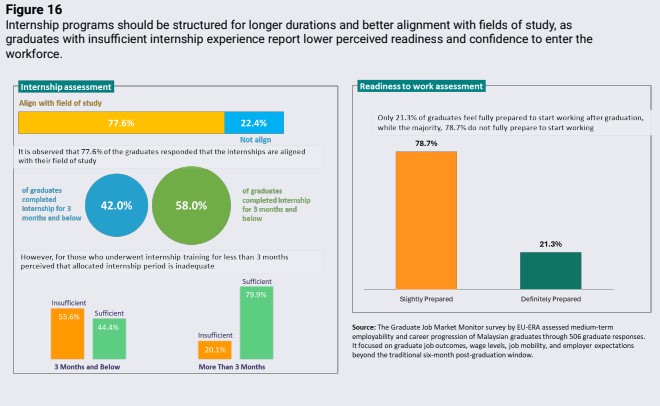
To tackle these issues, the report recommends significant changes to both education and employment policies. These include moving away from misleading graduate employability statistics and revamping internships to better align education with job requirements.
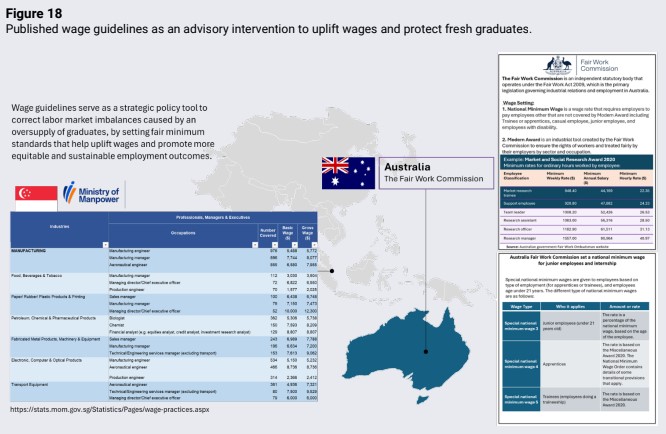
Additional recommendations include encouraging industries to upgrade and redesign jobs, as well as introducing official wage guidelines to address the issue of compressed salaries.
Ultimately, the report calls for comprehensive reforms and a "holistic policy ecosystem" that integrates education planning, labour market demands, and wage outcomes into a unified, results-driven national strategy.