What Is Income Tax & Why Do Malaysians Have To Pay It? Here's Everything You Need To Know
In simple terms, income tax is money you pay to the government based on the income you earn.

By Laila Zain — 06 May 2025, 01:07 PM
Every year, millions of Malaysians file their income tax — but many still don't fully understand what income tax actually is, or why we have to pay it
Whether you're a fresh graduate filing for the first time or someone who's never quite been sure what Lembaga Hasil Dalam Negeri (LHDN) really does, this guide is here to help.
In this 2025 guide, we'll break down:
- What income tax is (and what it isn't)
- Why you're required to pay it
- Who needs to pay income tax in Malaysia
- Where your tax money goes
- Understanding income tax rates in Malaysia
- What's new in 2025
- How to start filing your income tax
- What happens if you don't file or pay?
- Resources to help you file in 2025

First of all, what is income tax?
In simple terms, income tax is money you pay to the government based on the income you earn — whether from salary, freelance jobs, rental properties, business profits, interest from savings, or other sources (including foreign income brought into Malaysia). It's collected by LHDN, Malaysia's Inland Revenue Board.
The purpose? To fund public services and national development.
If you earn above a certain threshold in a year, you're required by law to declare your income and pay taxes on it. For the Year of Assessment (YA) 2024 (filed in 2025), the taxable income threshold is generally above RM34,000 per year (after EPF deductions), which is approximately RM2,833 per month.
However, it's crucial to note that even if your income is below this, if you have been assigned a tax number, LHDN encourages filing.
Why do we have to pay income tax?
Nobody loves paying taxes — but they're a crucial part of keeping the country running. Here's where your tax dollars typically go:
- Healthcare (hospitals, clinics, vaccinations)
- Education (schools, public universities)
- Public infrastructure (roads, public transport)
- National defense and security
- Welfare programmes and subsidies
- Disaster relief and recovery
- Development projects and administration
- Payment of national debt
When more people pay taxes, the government has more resources to improve services and reduce national debt. A well-funded government can invest more in areas that benefit all citizens, leading to a higher quality of life and a more stable economy.

Who needs to pay income tax in Malaysia?
You must declare your income if:
- You are earning above RM34,000 per year (after EPF deductions), which is around RM2,833 per month. Some sources indicate the threshold based on gross annual income before deductions is around RM37,333. It's best to check the official LHDN guidelines or use their income tax calculator for certainty.
- You are self-employed, doing freelance or gig work (e.g. e-hailing drivers, food delivery riders).
- You run a business, even a small home-based one.
- You have rental income, interest from savings, or foreign income brought into Malaysia. Note that foreign-sourced income received by resident individuals was previously exempt but this exemption has been extended until December 2036.
- You're a non-resident working in Malaysia (with different tax rules; typically taxed at a flat rate of 30% on taxable income earned in Malaysia if staying for more than 60 days but less than 182 days). Residents, staying 182 days or more, are taxed on a progressive scale.
Even if you don't owe anything (because your income is too low or tax reliefs cover it), you still need to file if you hit the filing threshold or have a tax file number.

When is the income tax filing deadline for 2025?
LHDN's deadlines for Year of Assessment (YA) 2024, filed in 2025, are expected to be:
- 30 April 2025 for individuals with employment income only (Form BE) - Manual Filing
- 15 May 2025 for individuals with employment income only (Form BE) - e-Filing (typically extended by 15 days)
- 30 June 2025 for individuals with business income (Form B) - Manual Filing
- 15 July 2025 for individuals with business income (Form B) - e-Filing (typically extended by 15 days)
LHDN typically encourages e-Filing through the ezHASiL portal or the MyTax platform for convenience and may grant an extension for online submissions. Always check the official LHDN website for the most accurate and updated deadlines.
Understanding income tax rates in Malaysia
Malaysia uses a progressive tax system, which means the more money you earn (after tax reliefs and deductions), the higher the percentage of tax you'll pay on that portion of income.
You're not taxed the same rate on your entire income; only the income within each range is taxed at that specific rate.
Here are the income tax rates for YA 2024 (to be filed in 2025):For example, if your chargeable income is RM65,000:
- The first RM5,000 is tax-free
- The next RM15,000 (RM 5,001–20,000) is taxed at 1%
- The next RM15,000 (RM 20,001–35,000) is taxed at 3%
- The next RM15,000 (RM 35,001–50,000) is taxed at 8%
- The final RM15,000 (RM 50,001–65,000) is taxed at 13%
Only the part of your income within each bracket is taxed at the stated rate, not your whole salary. This ensures lower earners aren't overtaxed.
Additionally, tax reliefs and deductions can significantly reduce your chargeable income and, consequently, the amount of tax you need to pay.

Only the part of your income within each bracket is taxed at the stated rate, not your whole salary. This ensures lower earners aren't overtaxed.
Additionally, tax reliefs and deductions can significantly reduce your chargeable income and, consequently, the amount of tax you need to pay.
1. Higher tax relief limits
Several tax relief categories now have increased limits. Here are some of the key reliefs available:
- Individual Relief: RM9,000
- Spouse Relief (if your spouse has no income): RM4,000
- Child Relief:
- RM2,000 per child (under 18)
- RM8,000 per child (18 and above, in full-time education)
- EPF Contributions: Up to RM4,000
- Life Insurance/Takaful & Voluntary EPF Contributions: Up to RM3,000 (combined)
- Medical Expenses (for serious illnesses, fertility treatments, and full medical check-ups): Up to RM10,000 (with specific sub-limits)
- Education Fees (self): Up to RM7,000 (for approved qualifications)
- Lifestyle Relief (books, electronics, Internet, sports equipment): Up to RM2,500
- Childcare Fees (children aged 6 and below): Up to RM3,000

2. e-Invoicing now mandatory (phased implementation)
Malaysia is rolling out mandatory e-Invoicing in stages:
- From 1 January 2025: Required for businesses with annual revenue between RM25 million and RM100 million
- From 1 July 2025: Required for all taxpayers, regardless of income level
This initiative aims to improve the accuracy of tax reporting and reduce administrative burdens.
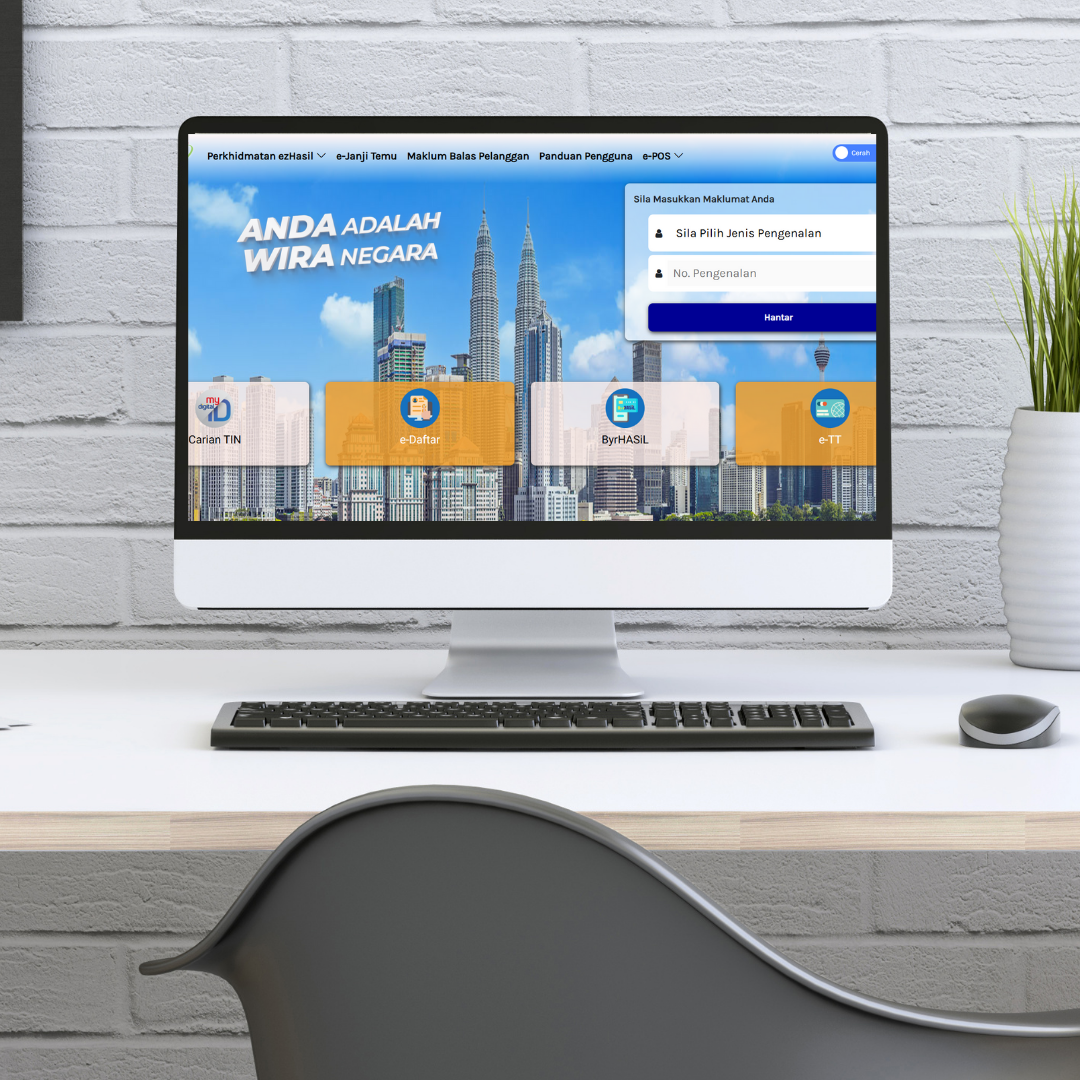
3. Improved MyTax portal and mobile app
LHDN continues to enhance the MyTax portal and mobile app with features designed to simplify tax filing:
- A more intuitive dashboard
- Consolidated payroll services under e-PCB Plus
- A Tax Identification Number (TIN) search tool using MyDigital ID
- Tools to check your tax status and refund progress
4. Ongoing scrutiny of foreign-sourced income
While the general exemption for foreign-sourced income has been extended, taxpayers bringing money into Malaysia should ensure compliance with LHDN's reporting requirements. Monitoring and enforcement remain active.
5. New dividend tax for high-earning investors
Starting from YA 2025, individual taxpayers who receive more than RM100,000 in dividend income per year will be subject to a 2% tax on the excess amount. This is a new measure affecting high-net-worth individuals and investors.
How to file your income tax in Malaysia
There are two main ways to file:
- Manually — by printing and mailing the physical form
- Online via e-Filing — fast, secure, and the recommended method through the MyTax portal
First-time filer? You'll need to register with LHDN and activate your e-Filing account through MyTax. You can register online via the e-Daftar portal or manually at an LHDN branch.
Activation of your e-Filing account may require obtaining a PIN, which can be done online via e-CP55D on the MyTax website or by visiting an LHDN branch.
Get the step-by-step guide on how to file your income tax here.
What happens if you don't file or pay?
Not filing your income tax is a legal offence under the Income Tax Act 1967. You may face:
- Fines up to RM20,000
- Late payment penalties (ranging from 10% for the first 30 days of delay, with potential increases for further delays)
- Legal action and travel restrictions
If you've missed previous filings, it's always better to voluntarily declare and settle your taxes. This may help reduce penalties or avoid prosecution under the Voluntary Disclosure Programme (if applicable).
What happens if you get audited by LHDN?
While not every taxpayer will be audited, LHDN does conduct routine tax audits and investigations to ensure accuracy and compliance. These audits may be triggered by discrepancies in your tax return, unusually high claims for reliefs, or random selection.
If you're selected, LHDN will typically notify you in writing and request supporting documents such as receipts, income statements, and bank records.
Being audited doesn't necessarily mean you've done something wrong. But it's important to keep clear, accurate records for up to seven years, as required by law.
Cooperating fully and responding promptly can help resolve the process smoothly. If mistakes are found, you may be asked to pay additional taxes along with penalties or interest.
In more serious cases, legal action could be taken, though this is rare for straightforward errors.

Understanding income tax isn't just about following the rules, it's about knowing your rights, claiming the reliefs you're entitled to, and contributing to national development
Once you know the basics, filing becomes far less intimidating. Need help getting started?
Here are more resources to support your filing process:
- Tax Reliefs You Can Claim in 2025
- A Step-By-Step Guide To Filing Your Income Tax For The First Time
- How To Fix Your Filing If You Made A Mistake On Your Income Tax Declaration Form
- What To Do If You Miss The LHDN Tax Filing Deadline
- PSA: You Still Have To File Your Income Tax Even If You Don't Earn Enough To Get Taxed
- LHDH's Official Website for more information
- MyTax Portal to file your income tax
